


Isotoma hypocrateriformis Woodbridge Poison Endemic
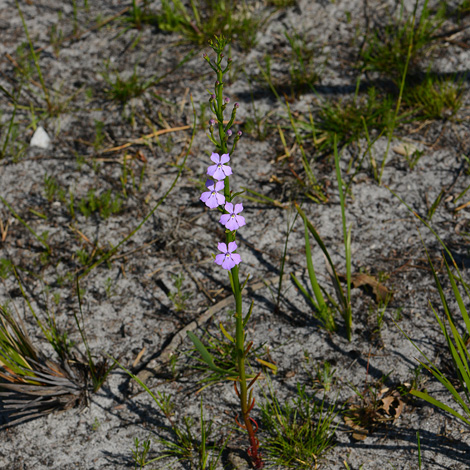
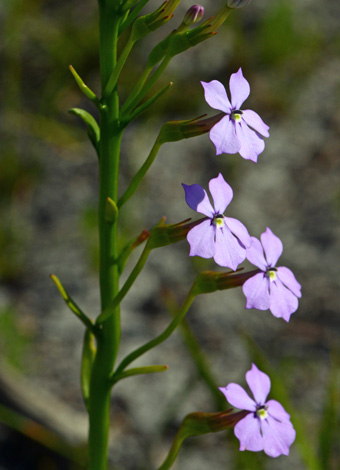
The story of this plant goes back to the days of the early Western Australian settlers. They brought European stock with them to Australia: cattle, horses, pigs, goats as well as their domestic animals like cats and dogs. They noticed that there were rather too many deaths amongst their animals to be explained by usual reasons and quickly became convinced they were being poisoned by something or someone.
An early candidate for poisonous plant was Isotoma hypocrateriformis which was similar in appearance to a known poisonous plant from Europe. The botanist James Drummond gave it the common name of Woodbridge Poison in the 1840s. There was much dispute about the real cause of the animal deaths until proper tests were done by feeding animals different potentially poisonous plants. Eventually it as shown the Woodbridge Poison, although it does have some toxicity, was not the cause of the animal deaths.
The real culprits were certain members of the Fabaceae (Pea family) such as Gastrolobium calycinum (York Road Poison) and Gastrolobium oxylobioides (Champion Road Poison). These plants have flowers and buds which contain significant concentrations of sodium monofluoroacetate which is poisonous to non-native animals like cattle, sheep and horses.
Native animals however are immune to this toxic effects of this substance, so it has been used to differentially poison feral European foxes and cats (1080 poison) which predate native ground dwelling marsupial animals in western Australia.
Isotoma hypocrateriformis is quite common from just south of Shark Bay down the west coast including the wheat belt, along the south coast even as far as Esperance.
|
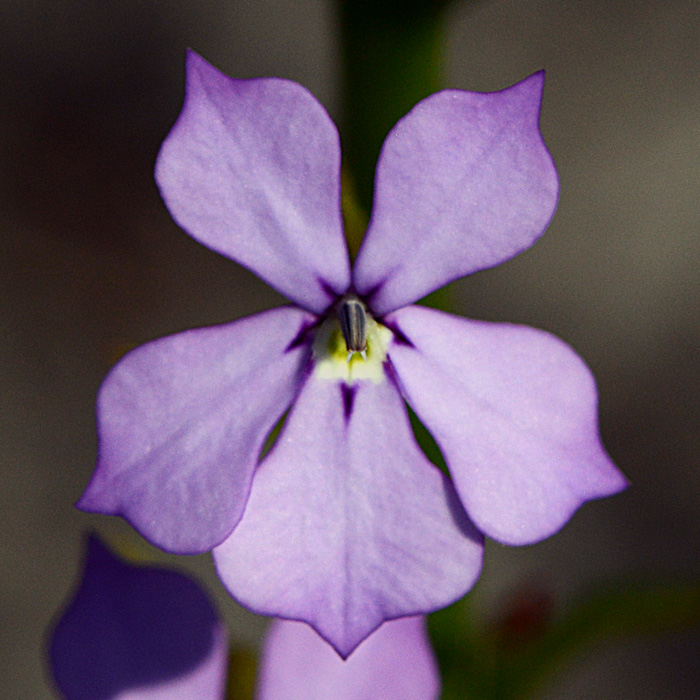
| Isotoma hypocrateriformis Woodbridge Poison |
Verge south of Northcliffe, Western Australia, 10th October 2015
Added on 19th December 2025